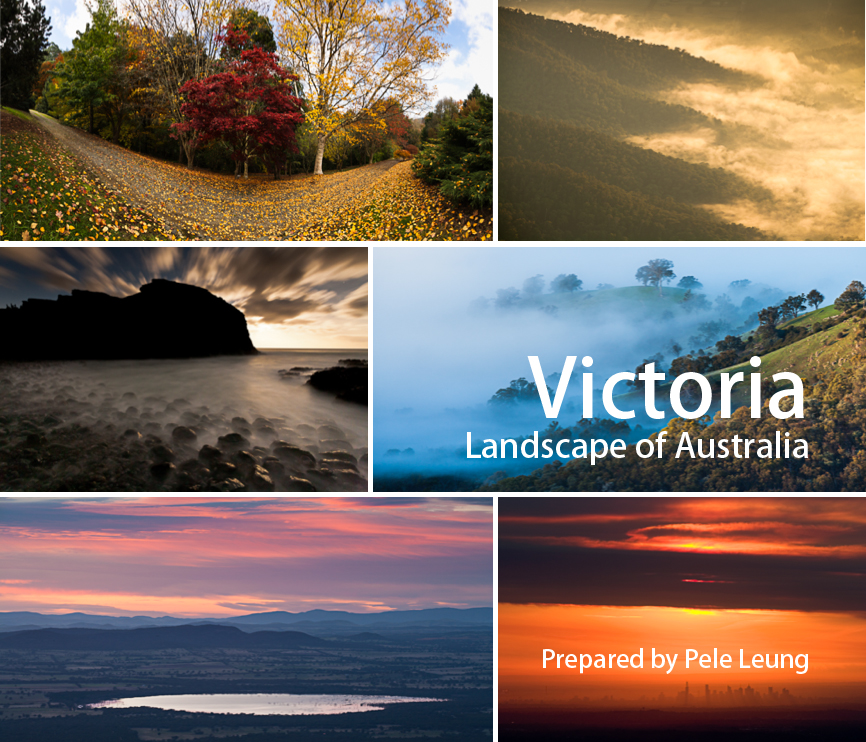
Landscape Photography Workshop 2011
“Open your gateway to landscape photography, refine your vision and take you to the extreme photographic horizon.”
If you don't know where to start or just want to refine your vision in landscape photography, this workshop is our answer to your prayers. To determine whether this workshop could satisfy your demands, we suggest you to consider the following criteria:
- Does the workshop agenda fit your requirements?
- Find out whether Pele knows his craft well by taking a glimpse of his portfolio. See before you believe.
- Find out whether Pele has practical experiences in conducting presentations. Remember, sometimes a good photographer may not be a good teacher. And of course you need both qualifications from Pele.
Believe it or not, we trust that this workshop is one of your best photographic investments in 2011.
This landscape photography workshop is divided into two sections, the Beginner section and the Intermediate to Advanced section, to cater for photographers in different knowledge levels. Each section consists of six individual but related sessions for easy understanding.
Each section can be taken individually but also be combined as a comprehensive syllabus.
Date: Saturday, 27 August, 2011
Time:
- 9:00am – 9:15am (Registration)
- 9:15am – 12:15pm (Beginner section)
- 1:15pm – 5:00pm (Intermediate to Advanced section)
Venue: The Merlot Room, Quest on Doncaster, 855 Doncaster Road, Doncaster, Victoria 3108 - Location Map
Cost: all prices are GST inclusive.
Normal prices |
Early bird prices (*) |
|
| Beginner section | $66 |
$59 |
| Intermediate to Advanced section | $132 |
$119 |
| Both sections (10% discount) | $178 |
$159 |
(*) Registered on or before 30/6/2011
What are included:
- Workshop presentation and all presentation materials in PDF format on CD
- Morning tea and/or afternoon tea with bakery refreshment
Registration and payment:
Register and reserve your seat by email (pelel@peleleung.com) and we will advise you our bank details for your direct transfer payment.
Cancellation policy:
Your cancellation will be accepted only on or before 15 July 2011 with full refund less $33 administration fee. A full refund will be made by us if we have to cancel the workshop.
Agenda (Download the PDF printable version)
(1) Beginner Section – 160 minutes
- Roadmap of your landscape photography (15 min)
If you are serious in landscape photography you need a roadmap like every project does. Just like buying a camera, there are a lot of choices to make for your roadmap but not all of them would lead you to a fruitful result. This short session gives you some suggestions of where to start and how to achieve your photographic goals.
- Are you fully equipped for landscape photography? (20 min)
Having the right tools is much more important than owning some expensive gear. We review and explain the uses of some important photographic equipment and software to streamline your landscape photography.
- How to shoot some typical landscapes (45 min)
From mountains to oceans, from countries to cities, from forests to plains, from farmlands to deserts, from beaches to snow fields, we investigate various observation and shooting techniques for photographing different kinds of landscapes. You will learn the fundamental skills to maximise your success in photographing a given location.
- Initial study of landscape photography compositions (30 min)
We will investigate various kinds of classical compositions and discuss how to absorb them into your own style of landscape photography.
- The typical post processing and enhancements of landscape photos (20 min)
We will discuss various post-processing techniques to enhance your landscape photos. DPP, Photoshop and Photomatix will be used for demonstration.
- Introduction to digital A/V (20 min)
One of the side effects of digital photography is that nowadays we seldom print our photos and normally view photos on screen. If you are not satisfied with plain slideshows and want to find out how to improve them, this is the session for you.
- Questions and answers (10 min)
(2) Intermediate to Advanced Section – 205 minutes
- Landscape photography composition study by examples (30 min)
Arguably one of the most effective ways to learn photographic composition is to study some successful images captured by others. We will run through a dozen or more successful images and analyse their winning reasons.
- Shooting ultra-panorama (30 min)
Good photography requires photographers to make positive differences. When the 3:2 aspect ratio becomes the norm there is a way to break the visual limitation – panoramic photography. This session provides comprehensive information for multi-photo-stitching panoramic photography up to 360º. We will discuss gear selection and setup, extreme-angle composition and various shooting techniques to produce flawless images for your stitching process afterwards.
- Professional image stitching (30 min)
This session illustrates the professional image stitching process and techniques using PTGUI Pro, one of the best stitching software in the industry. In addition, we cover the processing techniques of combining stitching and exposure blending.
- Digital night photography (30 min)
We will investigate the potential photographic opportunities in landscape photography at night. Practical guidelines will be provided in shooting and post-processing images captured in darkness. Detail steps in digital image stacking and noise reduction techniques will also be discussed.
- HDR and image blending for exposure (30 min)
Is HDR an ideal way of solving the exposure limitations? We will unlock the concept behind the scene. Moreover, image blending will also be discussed as an effective alternative in exposure control. Photomatix, one of the best software in the HDR industry, will be used for demonstration.
- Digital A/V design (45 min)
Choosing the right photos and music is important for authoring A/V and in fact there are a lot of thoughts in design and production behind an enjoyable A/V. We will discuss various design elements that could contribute to successful A/Vs. Although most design principles discussed are independent of the software used, we will demonstrate this by using PictureToExe, one of the most popular software for A/V production.
- Questions and answers (10 min)